To make a secure online donation, please click the button below

The Latin American Program (LAP) of the Auschwitz Institute for the Prevention of Genocide and Mass Atrocities (AIPG) deepened its work in Argentina in 2025 to strengthen institutional capacities to prevent atrocities in migration contexts. Alongside the implementation of two national workshops in Buenos Aires in May and Salta in June, the Program identified an opportunity to create training initiatives, foster inter-institutional and inter-jurisdictional coordination, and promote dialogue among key stakeholders.
Between August and November, following a participant identification process, the LAP delivered a sequential virtual training cycle for 22 national, provincial, and local public officials from across the country. The series consisted of two courses: Foundations in Mass Atrocity Prevention and Migrations and Mass Atrocity Prevention. This process helped strengthen the integration of atrocity prevention principles into migration-related policies and practices, and highlighted a growing institutional interest in addressing human trafficking as a risk factor.
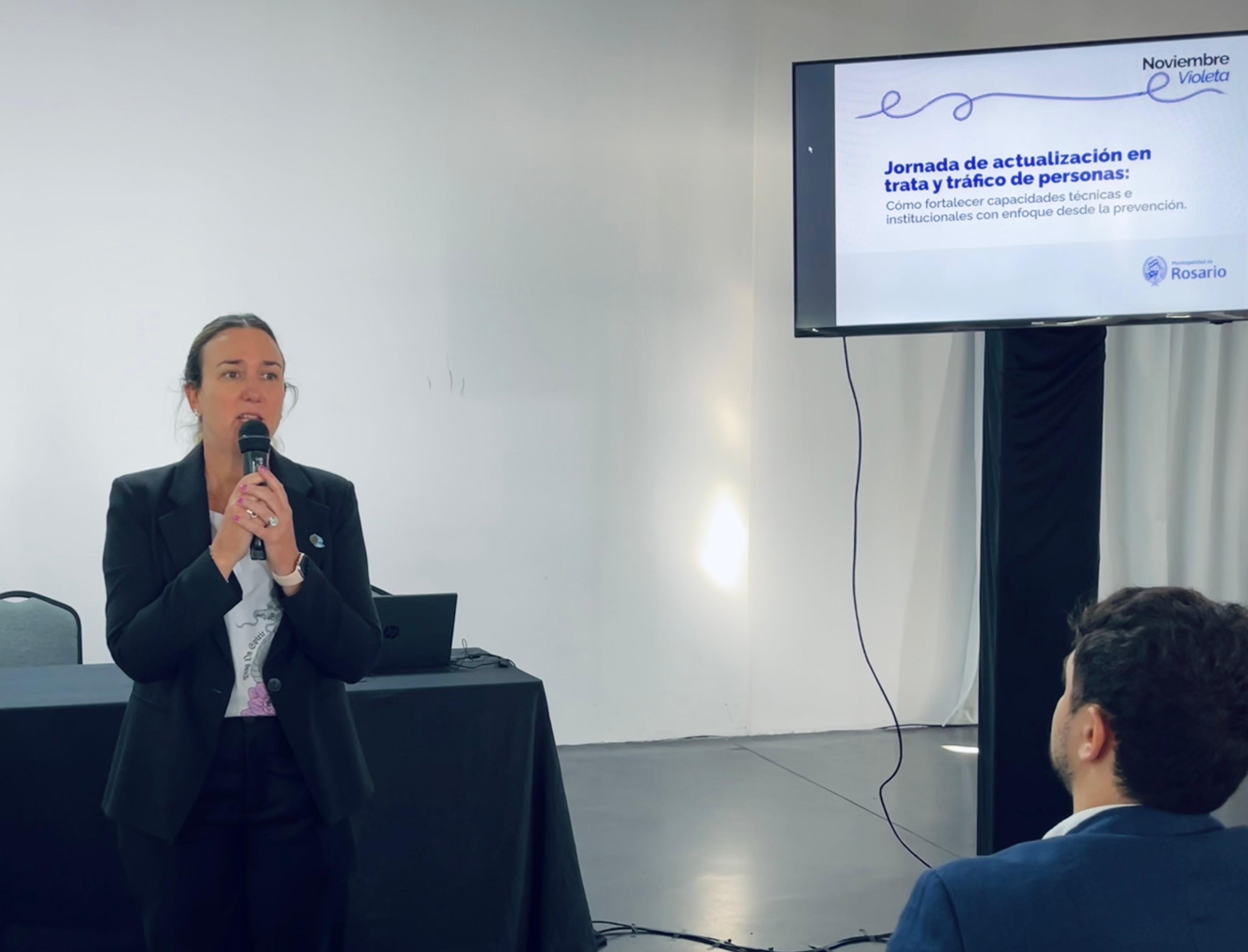
The virtual training and capacity-building process was complemented by in-person dialogue sessions aimed at consolidating the project’s progress. In November, the LAP accompanied the National Directorate for Migration (DNM) and the Secretariat for Equality, Gender, and Human Rights of the Municipality of Rosario in the organization of the Update Workshop on Human Trafficking and Smuggling: How to Strengthen Technical and Institutional Capacities Through a Prevention Approach. This exchange space, aimed at public officials, helped update conceptual frameworks, analytical tools, and prevention strategies to support a more effective institutional response. In addition, the workshop included a new session of the Municipal Roundtable on Human Trafficking, intended to agree on shared lines of action, review coordination pathways, and strengthen cooperation mechanisms among provincial, municipal, and federal agencies.
The 2025 phase of the project concluded with a national meeting in Buenos Aires in December, where the institutions involved throughout its implementation reviewed the main results achieved, exchanged lessons learned and challenges, and reaffirmed their institutional commitment to incorporating prevention approaches into migration governance and related public policies. The meeting also enabled agreement on priorities for 2026, including the development of specialized training content on human trafficking, with a victim-centered approach aimed at strengthening technical and institutional capacities at the national level.
El Programa para América Latina (LAP) del Instituto Auschwitz para la Prevención del Genocidio y las Atrocidades Masivas (AIPG) profundizó su trabajo en Argentina en 2025 con el objetivo de fortalecer las capacidades institucionales para la prevención de atrocidades en contextos migratorios. Junto con la implementación de dos talleres nacionales realizados en Buenos Aires en mayo y en Salta en junio, el Programa identificó la oportunidad de desarrollar iniciativas de capacitación, fomentar la coordinación interinstitucional e interjurisdiccional y promover el diálogo entre actores clave.
Entre agosto y noviembre, tras un proceso de identificación de participantes, el LAP desarrolló un ciclo de capacitación virtual secuencial destinado a 22 funcionarixs públicos de los niveles nacional, provincial y local de todo el país. La serie estuvo compuesta por dos cursos: Fundamentos de la Prevención de Atrocidades Masivas y Migraciones y Prevención de Atrocidades Masivas. Este proceso contribuyó a fortalecer la incorporación de los principios de prevención de atrocidades en las políticas y prácticas vinculadas a la migración, y puso de relieve un creciente interés institucional en abordar la trata de personas como un factor de riesgo.
El proceso de capacitación virtual y fortalecimiento de capacidades se complementó con espacios de diálogo presenciales orientados a consolidar los avances del proyecto. En noviembre, el LAP acompañó a la Dirección Nacional de Migraciones (DNM) y a la Secretaría de Igualdad, Género y Derechos Humanos de la Municipalidad de Rosario en la organización del Taller de Actualización sobre Trata y Tráfico de Personas: Cómo Fortalecer las Capacidades Técnicas e Institucionales desde un Enfoque de Prevención. Este espacio de intercambio, dirigido a funcionarixs públicos, permitió actualizar marcos conceptuales, herramientas de análisis y estrategias de prevención para apoyar una respuesta institucional más eficaz. Asimismo, el taller incluyó una nueva sesión de la Mesa Municipal contra la Trata de Personas, orientada a acordar líneas de acción compartidas, revisar los circuitos de articulación y fortalecer los mecanismos de cooperación entre los niveles provincial, municipal y federal.
La fase 2025 del proyecto concluyó con un encuentro nacional realizado en diciembre en la ciudad de Buenos Aires, en el que las instituciones involucradas a lo largo de su implementación revisaron los principales resultados alcanzados, intercambiaron aprendizajes y desafíos, y reafirmaron su compromiso institucional con la incorporación de enfoques de prevención en la gobernanza migratoria y en las políticas públicas relacionadas. El encuentro también permitió consensuar las prioridades para 2026, entre ellas el desarrollo de contenidos de capacitación especializados en trata de personas, con un enfoque centrado en las víctimas y orientado a fortalecer las capacidades técnicas e institucionales a nivel nacional.