To make a secure online donation, please click the button below

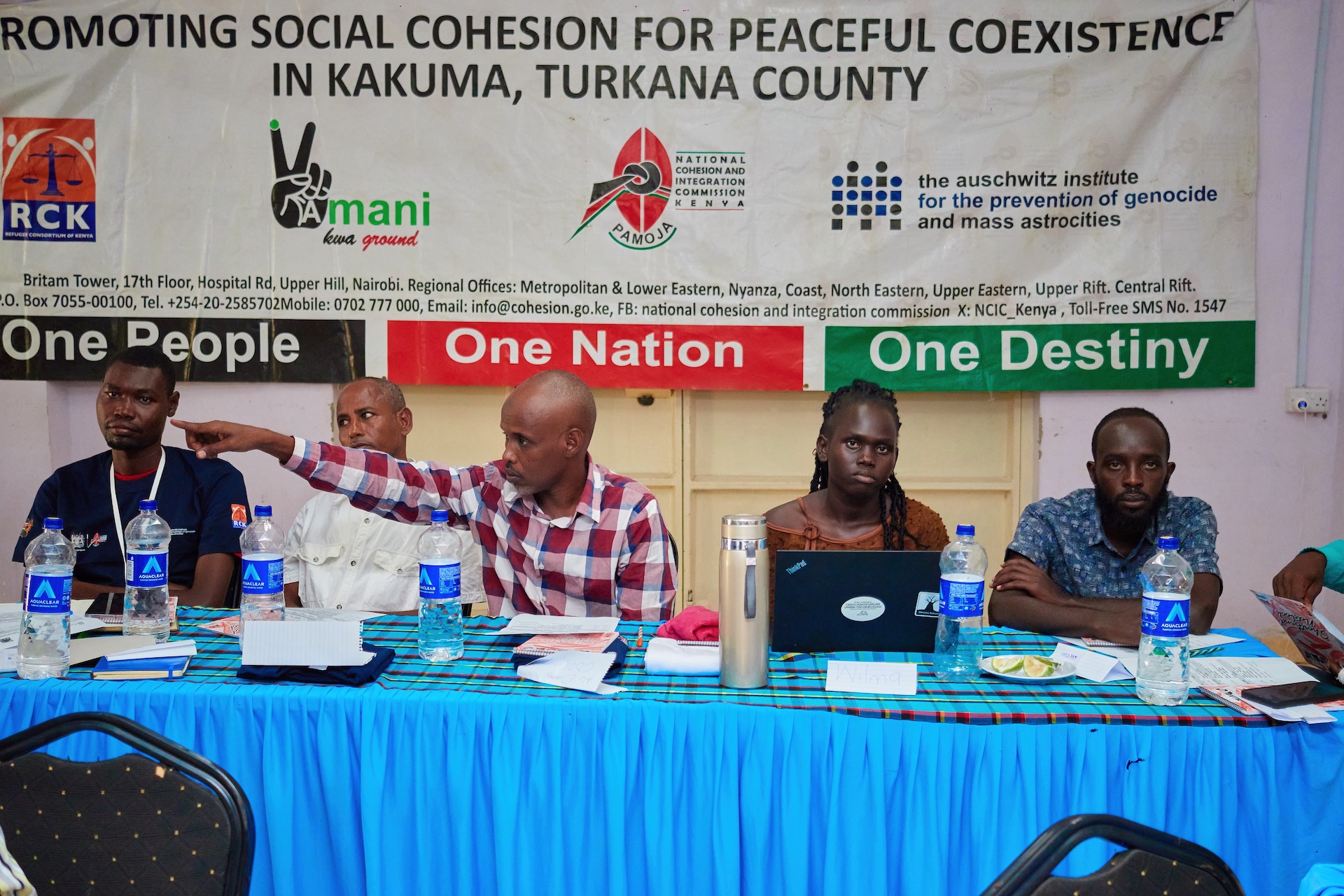
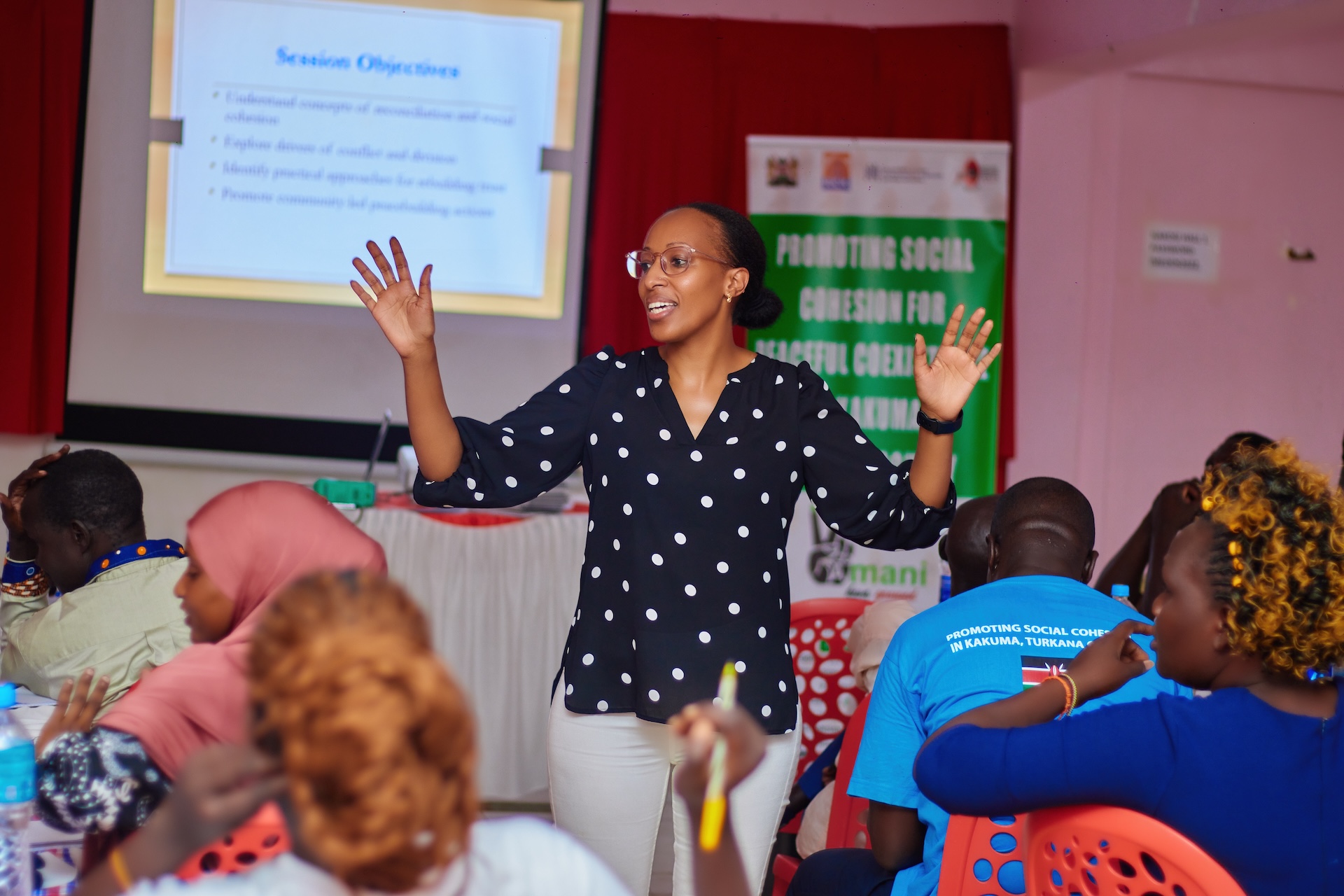
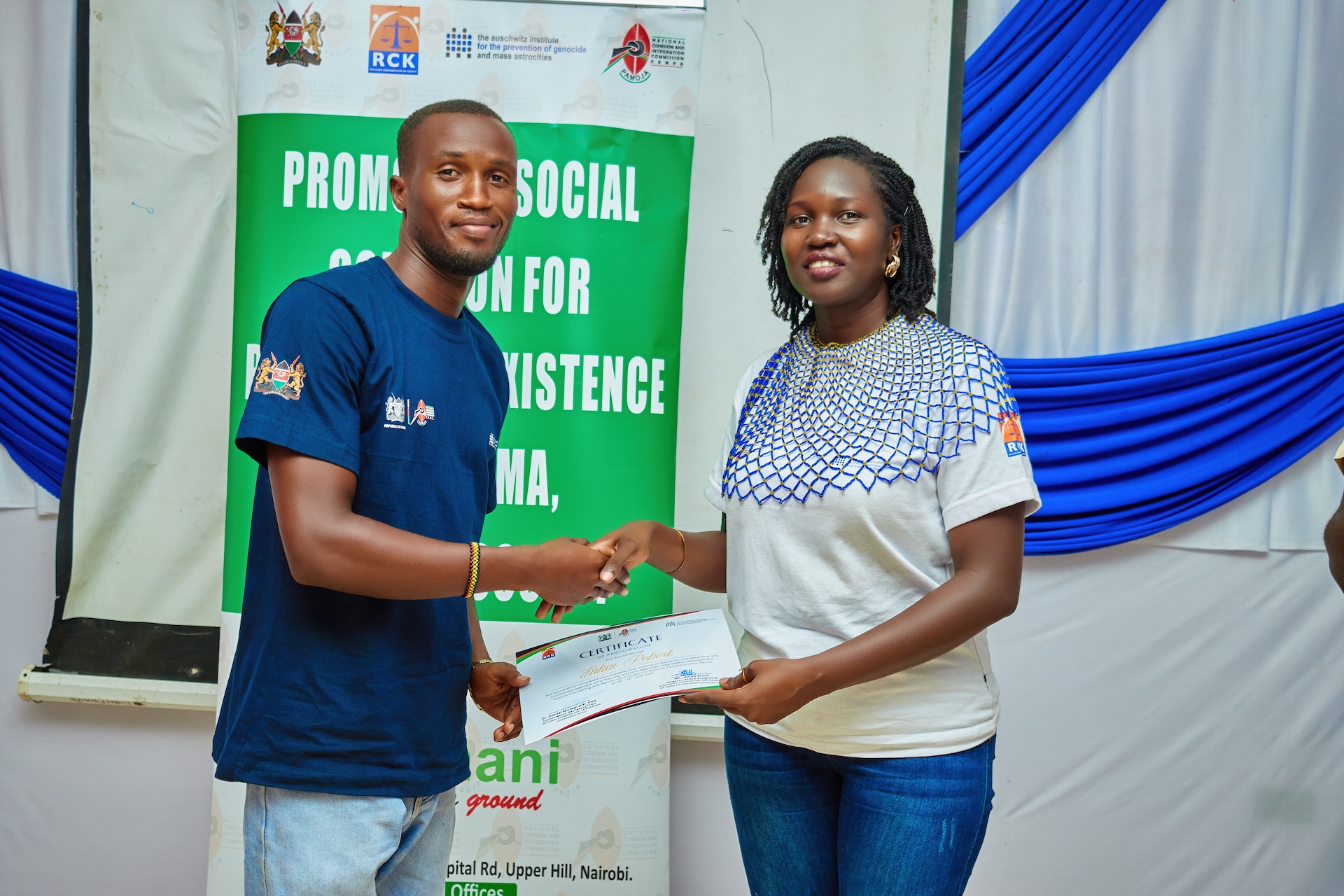
From June 18 to 21, AIPG's Africa Programs Office, in partnership with Kenya's National Cohesion and Integration Commission (NCIC), conducted a Training and Capacity-Building Workshop for Peace, Cohesion, and Security Actors in Kakuma Municipality, Turkana County. Held as part of the Bruno and Suzanne Scheidt Refugee Protection Program, the event brought together 50 representatives from the national and county governments, media, local communities, refugees, youth, women, and people with disabilities (PWDs) to strengthen their capacity to promote social cohesion in the region.
The four-day workshop convened participants, including members of the sub-county security team, civil society leaders, media personnel, and representatives from refugee and host communities in the first cohort, while the second cohort primarily focused on members of the host community, refugee leaders, and media representatives. The workshop provided a platform for participants to meaningfully interact, share experiences, and learn from sessions designed to enhance their peacebuilding skills. Partners, including the NCIC, the Department of Refugee Services (DRS), and the Refugee Consortium of Kenya (RCK), emphasized the vital role of partnerships in fostering peaceful co-existence between host communities and refugees. They encouraged all participants to continue collaborating in their shared mission of advancing peace within the municipality.
The training focused on building participants' capacity to better understand conflict dynamics, including their nature, drivers, and conflict cycle, and how these relate to refugees and host communities in Kakuma. Participants were trained on the techniques of conflict analysis and mapping, particularly on the ability to identify drivers, actors, triggers, and connectors. They were also trained on conflict resolution, reconciliation, and social cohesion approaches, early warning and early response systems, mental health and psychosocial support for conflict-affected communities, as well as recognizing, detecting, and de-escalating hate speech.
During the trip, the team also took the opportunity to visit the World Food Programme (WFP) Compound in Kakuma to witness the International Organization for Migration (IOM)'s distribution of non-food items to vulnerable refugees, including PWDs, single mothers, widows, child-headed families, and older adults. The IOM team guided us through the procedures to follow if a partner wishes to support refugees in Kakuma.
Since the workshop coincided with World Refugee Day, the team also participated in the World Refugee Day commemoration and solidarity walk in Kakuma on June 19 and 20, held under the theme "Until Everyone Is Safe." The commemoration took place at Kakuma 3 Market and was attended by community members, refugees, and civil society organizations supporting the region, including UNHCR, the WFP, the IOM, the RCK, and others. Remarks from participating organizations emphasized the importance of social cohesion, education, and resilience for all.
Del 18 al 21 de junio, la Oficina de Programas para África de AIPG, en colaboración con la Comisión Nacional de Cohesión e Integración (NCIC) de Kenia, llevó a cabo un taller de formación y fortalecimiento de capacidades dirigido a actores de paz, cohesión y seguridad en el municipio de Kakuma, condado de Turkana, Kenia. La actividad se realizó como parte del Programa de Protección para Refugiadxs Bruno y Suzanne Scheidt. El taller reunió a 50 representantes del gobierno nacional, el gobierno del condado de Turkana, medios de comunicación, comunidades locales, personas refugiadas, jóvenes, mujeres y personas con discapacidad (PcD), con el objetivo de promover la cohesión social en el municipio de Kakuma.
El taller, de cuatro días de duración, reunió en un primer grupo a integrantes del equipo de seguridad del subcondado, líderes de la sociedad civil, profesionales de los medios de comunicación y representantes de las comunidades refugiadas y de acogida. Un segundo grupo estuvo conformado principalmente por miembros de la comunidad de acogida, líderes de las comunidades refugiadas y medios de comunicación. El espacio brindó una oportunidad para que lxs participantes intercambiaran experiencias, dialogaran de manera significativa y adquirieran herramientas orientadas a fortalecer sus capacidades en materia de cohesión social y construcción de paz. En sus intervenciones, representantes de la NCIC, el Departamento de Servicios para Personas Refugiadas (DRS) y el Refugee Consortium of Kenya (RCK) destacaron la importancia de las alianzas para promover la cohesión social y la convivencia pacífica entre las comunidades de acogida y las personas refugiadas en el municipio de Kakuma, e instaron a lxs participantes a seguir colaborando en favor de la paz.
La capacitación se centró en fortalecer la capacidad de lxs participantes para comprender mejor las dinámicas de los conflictos, incluyendo su naturaleza, sus causas, su ciclo de desarrollo y la forma en que estos afectan a las personas refugiadas y a las comunidades de acogida en Kakuma. Asimismo, recibieron formación en técnicas de análisis y mapeo de conflictos, con énfasis en la identificación de factores desencadenantes, actores, detonantes y elementos de conexión. También se abordaron enfoques de resolución de conflictos, reconciliación y cohesión social, sistemas de alerta temprana y respuesta temprana, salud mental y apoyo psicosocial para comunidades afectadas por conflictos, así como estrategias para identificar, detectar y reducir la escalada de los discursos de odio.
Durante la visita, el equipo también tuvo la oportunidad de recorrer el complejo del Programa Mundial de Alimentos (PMA) en Kakuma para observar la distribución de artículos no alimentarios realizada por la Organización Internacional para las Migraciones (OIM) a personas refugiadas en situación de vulnerabilidad, incluidas personas con discapacidad, madres solteras, viudas, familias encabezadas por menores de edad y personas mayores. El equipo de la OIM explicó los procedimientos que deben seguir las organizaciones interesadas en brindar apoyo a las personas refugiadas en Kakuma.
Dado que el taller coincidió con el Día Mundial de las Personas Refugiadas, el equipo también participó en la conmemoración y la caminata de solidaridad realizadas en Kakuma los días 19 y 20 de junio bajo el lema «Hasta que todas las personas estén a salvo». La conmemoración tuvo lugar en el mercado Kakuma 3 y contó con la participación de miembros de la comunidad, personas refugiadas y organizaciones de la sociedad civil que prestan apoyo en la región, entre ellas el ACNUR, el PMA, la OIM, el RCK y otras entidades. Durante el acto, las organizaciones participantes destacaron la importancia de fortalecer la cohesión social, promover la educación y fomentar la resiliencia para todas las personas.