The Teachers' Network of the project "Citizenship and Democracy in School" is an initiative of the Warren Educational Policies Program of the Auschwitz Institute that aims to provide a space for support and constructive exchange for educators who implement the project or who develop proposals with similar themes and methodologies.
Considering this objective, this page gathers support materials for strengthening the culture of respect, citizenship and democratic practice in schools. Here you can also discover how to participate in our community and follow our events, news and courses firsthand.
Exclusive interviews with experts, extra content, news about our project and support materials for teachers and administrators. Click here to read our past newsletters and click here to join!
Stay up to date with the news, follow our announcements and be the first to receive notifications about upcoming webinars. Access here.
We currently offer the course Citizenship and Democracy in School, with editions for teachers and also for administrators, and the course Introduction to Genocide and the Prevention of Mass Atrocities. More information available here. Learn more about the training courses for teachers and education professionals, developed by the Warren Educational Policies Program of the Auschwitz Institute in partnership with other organizations.
Learn more about the training courses for teachers and education professionals, developed by the Auschwitz Institute's Warren Educational Policies Program in partnership with other organizations.
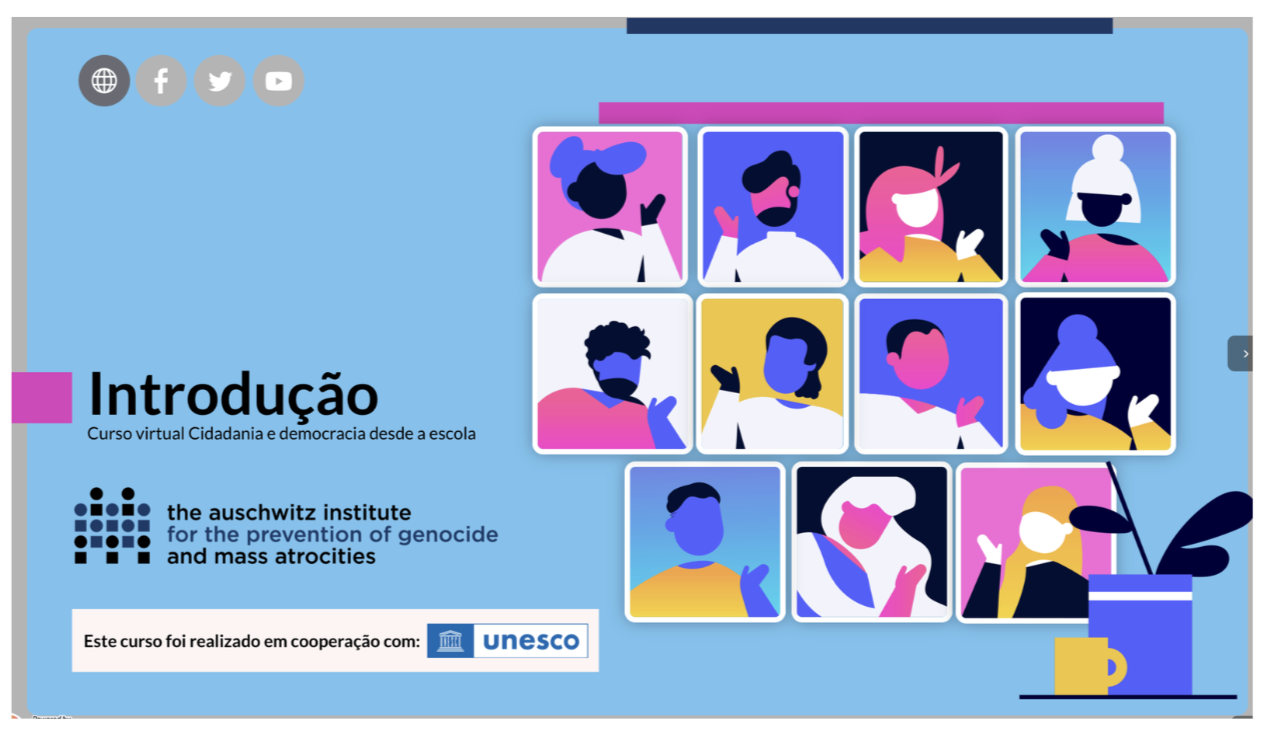
The course aims to offer educators from the final years of Elementary School II, High School, Youth and Adult Education (EJA), and the Socio-Educational System the methodological and pedagogical principles, as well as the themes of the Citizenship and democracy from school project, including diversity, human rights, democracy, citizenship, and youth participation.
The training is organized into five thematic modules:
Designed to be completed over five weeks, flexibly according to each participant's availability, the course is equivalent to 30 hours of study. The training can take place in either instructional or self-instructional format, with open calls or in partnership with Education Departments. The training is also available on AVAMEC free of charge to all interested parties. Access it here.

Recognizing the importance of working with school administrators, the Auschwitz Institute, in partnership with Instituto Unibanco, adapted the course originally designed for teachers, seeking to address the specificities of school management and promote reflection and the development of democratic management practices.
Also designed to be completed over five weeks, flexibly according to each participant's availability, the course is equivalent to 30 hours of study. The training can take place in instructional format, with open calls, or in collaboration with partner Education Departments.
The thematic pathway includes the following modules:
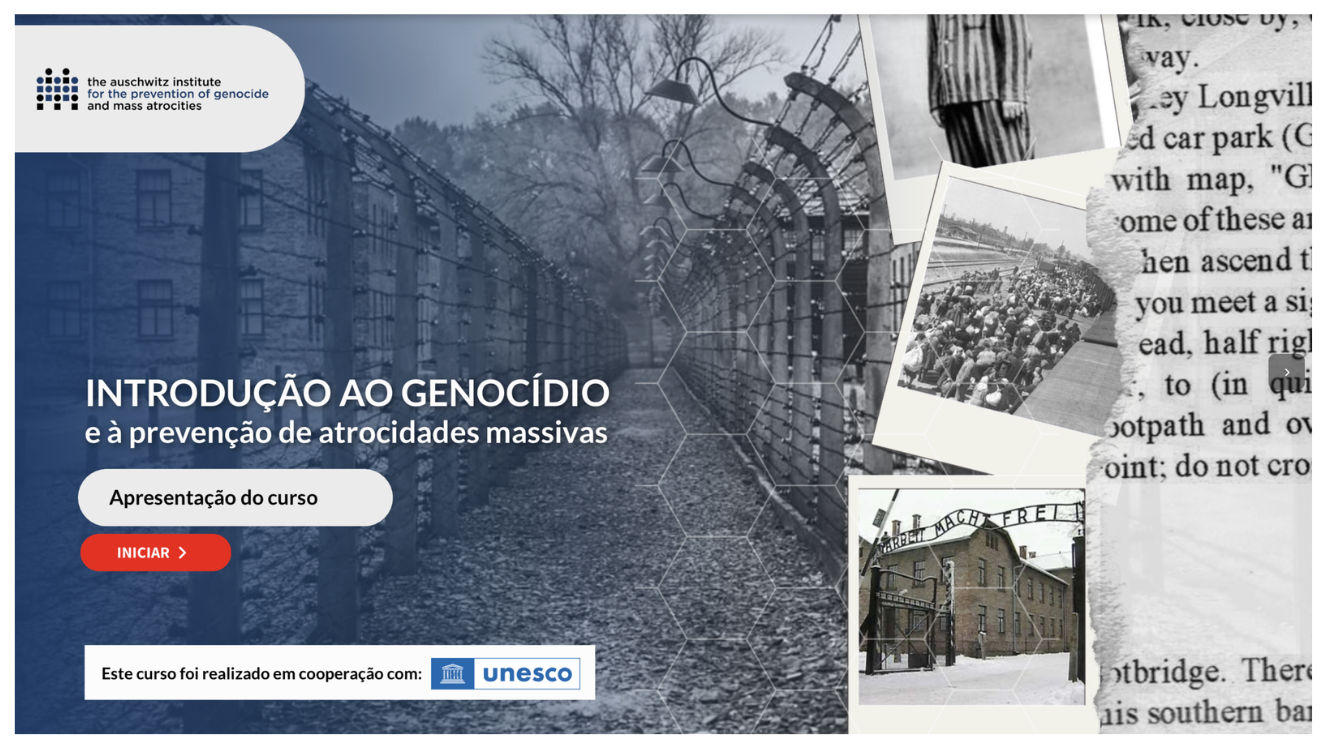
The course aims to promote discussion, with education professionals and other interested audiences, about the work of genocide and mass atrocity prevention, exploring risk factors relevant to the Brazilian reality.
The training is organized into five thematic modules:
Equivalent to 30 hours of study, distributed over five weeks and organized flexibly by participants, the training takes place in instructional format, with open calls and in collaboration with partners.